Urban Food Chains

the links between diet and power

Advertisement

Turning up the volume

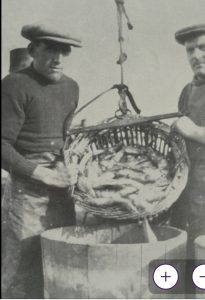
Scottish fishermen working in the North Sea from the from the 18th century onwards, adopted the cran basket as a measure of fish on the quayside; a full cran of herring weighed 56 stone and was usually spread across four quarter cran baskets. (56 stone = 56 x14 divided by 2,2 kilos) The quarter cran basket became a legalised trading measure in Scotland during the 19th century, followed by England and Wales in 1908.

The cran was first and foremost a volumetric unit, fixed in trading regulations at 37.5 imperial gallons, although dockside traders often needed to know the number of fish in a basket. While most quarter cran baskets held about 1,200 fish, the differing sizes and weights in arriving consignments ranged from around 700 fish (rare) to almost 2,000 (juveniles). For a piece count, there is no quick alternative to opening the basket.

The baskets were cylindrical with just a hint of a bulge: they were supplied in whole  cran, half cran and quarter cran sizes. The basket weaver wove a foot into each cran, so that every base stood solidly on the deck, crowding around the fishermen who were waiting for the seine nets to be brought inboard and emptied on the deck. The first task was to ensure that all the weevers were removed from the flailing mass of gasping fish. A weever is a very small fish, not more than  three or four inches long, if that. Their spiny backs have venomous stings that can kill an unwary man in minutes. The deck  crew sort and gather  the catch,  most of it is herring, bound for the smokehouses. Before the quarter cran baskets are filled, they are moved to the unloading area on the deck. Once again, the skill of the basket weaver is put to the test: a quarter cran basket holds on average seven stone (7stone = 7×14 divided by 2.2 kilos) of fish. The baskets are topped with a solidly woven rim. They are unloaded using a small steam-powered crane and of specially shaped pair of clips to hold the basket until they land on the quayside with a gentle scrunching noise. Soon to be smoked as kippers, some of this catch would have been sent to London by train overnight, arriving just in time for breakfast at a gentlemens’ club.
Maws


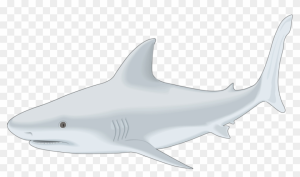
Will global warming and the acidification of the oceans lead to toothless sharks? Researchers in Germany have confirmed that current climatic conditions are a factor in accelerating tooth corrosion and disrupting the normal alignment of shark teeth. Visit Heinrich Heine University` to get the full story.


The Test of time

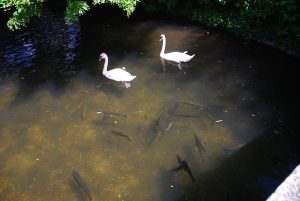
Faced with low water levels across its territory, Southern Water is preparing to apply to the British government for a drought order in a bid to keep up with user demand. The water tables at risk include those feeding the river Test. Rising near Basingstoke, the waterway flows 64 km into the sea near Southampton. It has been famous for some of the world’s highest quality freshwater fishing grounds  and accounts for 85% of the world’s cleanest habitat in its category. It is home to several endangered species of fish, otters and river mammals.

The British government is committed to protecting both habitats and diversity. It needs words not action to ensure that corporate expedience doesn’t kill off whatever remains of quality habitats like the river Test. Because extinction is forever.

What makes Scottish smoked salmon special?

Environmental campaigners in Scotland have been spied on for years by private surveillance contractors. Many of them have been trained by former military staff, who are given a free hand to operate outside the law. They are collecting higly sensitive personal data in ways that would land a legitimate operator in jail very rapidly.

Farmed salmon is Scotland’s most lucrative food sector: it does not occupy such a widely coveted position without being controversial. Early fish farms in Norwegian fjords were used as a model for similar developments in Scotland. However, Norway’s deeper fjords have stronger currents that prevent uneaten food from accumulating beneath the caged fish. The Scottish experience, on the other hand, has seen abject failures, leading to financial crises in the sector.

Rather than lose face, salmon farming investors hired the surveillance skills of an Afghanistan veteran. The ex-soldier targeted former fly fishing guide Corin Smith and another campaigner, Don Stanford after the pair filmed appalling conditions of young farmed salmon. They were crawling with jellyfish larvae, called sea lice. These parasites affect both wild and farmed salmon alike: in the later chronic stages, the skins of the infested fish become red  and blotchy, making them unsaleable for many end uses. A reliable way of shifting sea lice infested fish is to turn it into smoked salmon and look the other way when the bins go out. Instead of resolving the technical issues which dogged the irretrievably blighted fish farms, the investors paid huge sums of money over many years for surveillance operatives to dig out any personal information on the environmentalists, who were campaigning in the public interest. It is ironic that Scotland’s biggest food export earner should have a skeleton like that in its cupboard.


Of jellyfish and drifters (and coral)

For years now we have made doomsday predictions of what would happen when the earth started to heat up in earnest. Covering two thirds of the globe’s surface, the oceans are an obvious places to start looking for the intense and complex lifestyles of people like the Baujau, who have built a way of life in pockets of sheltered coastline. The groups live by the sea in the Phillipines, Malaysia and Indonesia. Perched atop marginal menisci of tidal sand, their houses are in constant need of repair. The fisher folk  take in huge lungfuls of air and freedive down to the reef, 20 metres below. Dives to 12 or 15 metres are common, compared to 5 metres for an active swimmer. A BBC team filmed them in action in 2020, ensuring that their way of life would be preserved for posterity. Women dive as routinely as the men, who will catch 15 kg or more in a morning’s fishing. One of the strongest freedivers filmed by the BBC used to be out at sea by 4 in the morning, and back on the shore around midday, with catches of about 15 kg. Having evolved bigger spleens, the Bajau divers can hold their breath for longer. Fisher woman Ima Baineng explains that the Bajau inherited their knowledge of fishing and the underwater world around them from their ancestors. She started diving at the age of four and went to sea with her father regularly from a very young age. “The corals are where the fish breed and if they suffer any damage, there won’t be any fish left,” she says.


The Bajau are completely committed to preserving the sea, which is hardly surprising since it keeps them fed. If, or when, life in the oceans fades away,  the Bajau will be the first group to feel the consequences. For now, there has not yet been a complete breakdown in the fishing, but there are growing numbers of damaged reefs and the Bajau lack technology to meet the potential threats head on. They are are politically active across the region: “From our ancestors to our great grandchildren we protect the coral,” says Mandor M Tembang. The Bajau efforts to preserve coral should be adopted as a standard for international conservation projects, argues Coral Reef Ambassador Muh Yakub, making the point that while Bajau coral management practice still works and is sustainable, there are good reasons for it to be supported.

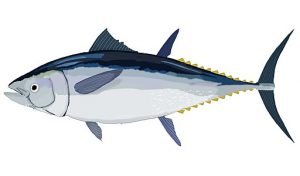
Tuna are fearsome hunters and eat whatever the ocean currents bring.  In previous years, the composition of plankton around the world has been relatively stable. As the sea warms up, the effects on the food supply become clearer. The ocean can carry more nutrients, if the opportunity arises. Riding the wave are species that were once considered as lunch. Turning briefly to tuna, they were once major predators, preventing coastlines getting piled high with trailer loads of beached jellyfish. Now look closely at a fish that has been raised in a fish farm — and preferably with a microscope or a magnifying glass. You’ll need a reference picture too, just confirm that you know what you’re looking at. 

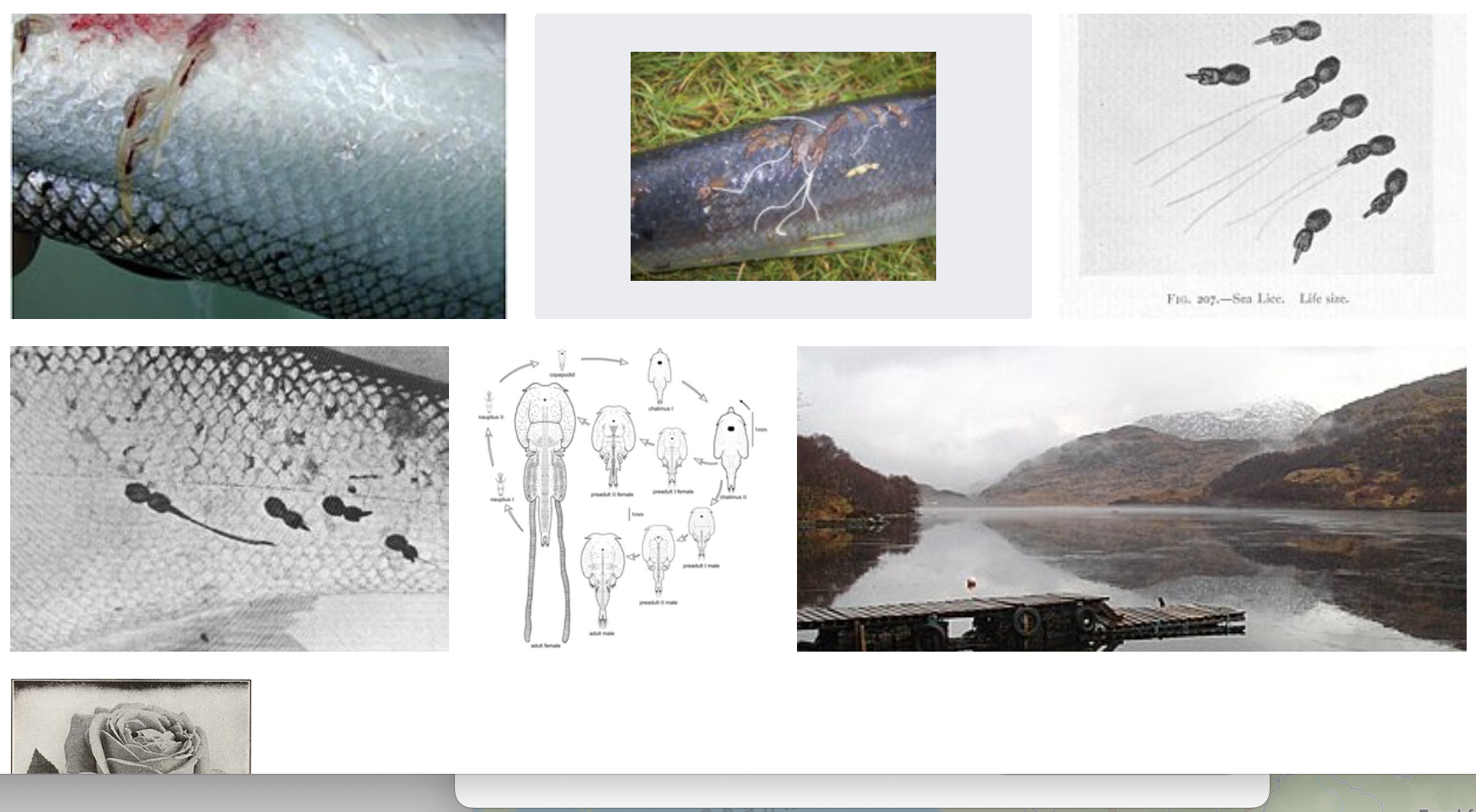
Start off on Wikimedia Commons to get an idea of what is available. Enter sea lice salmon in the search box and sit back, popcorn at the ready. I have just tried this: blink and you’ll miss it! To save time,  here’s a screengrab, showing three infested fish. In the top lefthand corner is a salmon (photographed in 2013); top centre an Atlantic farmed salmon and on the lefthand side again, an image of a brown trout retrieved from the publication of a book in 1910. Another sea lice picture, from the same publication occupies the top right hand corner, a 2020 diagram from Bergen University is centre left, while the 2010 picture of Loch Eilt was part of a photographic survey of the UK. How I came to snag a 1921 book cover on growing roses is a total mystery.

Now I’m not convinced that this even a drop in the ocean of general knowledge and I would say that there is an elephant in the room, getting in the way of some fairly basic facts that are uncomfortable for some folk.

Let’s start with sea lice, otherwise known as jellyfish larva. They used to have much lower survival rates in previous centuries, needing to embed themselves in the skin of an active fish soon after hatching. In the open waters of the world’s oceans, sea lice are way down the food chain, scattered far and wide. But a fish farm is an oasis of opportunity for countless creatures, even such a  random life form as a jellyfish. Hold that thought for a moment and ask yourself “Does a jellyfish ever decide anything?” No sooner have we posed the question than we have a ready answer: no way. It’s quicker than asking a jellyfish, for sure. They are simply not great communicators and it’s not personal: it’s a species thing.

Back at the fish farm, arrivng sea lice are greeted by the sight of more fish flanks than they could ever hope to get their teeth into. Beneath some of the fish cages there are piles of uneaten feedstock, that literally slipped through the net, not to mention wild fish cleaning up on the leftovers from above. By the time all this has been redistributed, another batch of tiny sea lice have hitched rides on both wild and captive fish. Life goes on.

There is something of a paradox in the way that creatures which are totally incapable of navigating in any sense of the word, should end up in such well-adapted feeding stations. The correlation between the extensive growth of fish farming and the resulting scourge for wild and captive populations is too well established to be talked down. Around the world, as well as exemplary sites, there are locations where ocean drifters have been carried to the kind of habitats that once upon a time, a species could only dream about. In the meantime, reputable fish processors reassure their customers that their hands are clean. Only top grade fish enter their premises and none but the finest salmon is handled on their lines.

Alongside the growth in fish farming has been the development of a mass market for smoked salmon. Conveniently for some fish farmers, it is possible to recover some marketable product even if the skin is less than perfect. Not that anyone would ever do such thing, you understand.

Drifters and evolution

Earlier in this blog I touched very briefly on the domestication of species that we now regard as part of the family, so to speak. The timespan for this process is counted in millennia, hundreds of generations. Is evolution a process that can be directed or driven? Or is it a developmental drift? Is this even a topic worth investigating? Share your thoughts in a comment and give me a break from folk with cryptic email addresses and obscure sales messages.

More follows later if there is a demand for it…

Food values

To paraphrase Saint John, in the beginning was the meal. And the meal was with God…

We live in a world with more explanations than questions, more doubts than answers, more belief than knowledge. What sustains us is an unseen chain of events that conspire to make human life happen, whatever it takes. Our dependence on this process is total. Welcome to the world of food.

Our shared origins go back to the beginning of time before crops or livestock had been domesticated. There is general agreement once hominids had domesticated fire — tamed is probably a better word — there was a further four to six millennia before domesticated animals and crops emerged on the scene. Scholars may disagree over when this change came about, but we can be sure that until it was a fait accompli, everything else in the story of civilisation was on hold. There are quibbles about when exactly such a change can taken as read, but everybody is counting in millennia.

The rest is history. The trouble with history is its dependence on written records and sometimes incorrect attribution of artefacts. The reason we know so little about early agrarian populations is because they had neither written records nor surviving artefacts to bear witness to their passing. This is a pity, since what we do know about these groups is that they lived in harmony with nature and were environmentally enlightened. We are indebted to some of the world’s most dedicated and skillful archaeologists, who have traced the remains of villages that were built in the trackless alluvial wetlands. At this time, hominids and animals fed future generations of flora and fauna. Man was still bound to the laws of nature at this time.

When the world’s first states emerged, they were expressions of an agrarian social structure. Their dealings with the world around them were probably more extensive than we will ever know. What matters is that we learn and understand from such scraps as we can glean, to focus on value without being diverted by units of account.

It’s a wrap

Researchers at Portland State University (PSU) have confirmed high levels of microplastics in five species of wild fish caught inshore by local fishermen. Some 180 out of 182 samples analysed for the study showed signs of contamination by microplastics, which can be persistent and harmful to many species, including humans.

Answer to a pilgrim’s prayer

Good news from the French government’s fishing watchdog, IFREMER. Fishing has re-opened for scallops for the inshore fleets of Brittany and la Baie de Seine which leads to the estuary of the river Seine and the docks of Le Havre, Rouen and Paris. The French scallop fishery closes in April and stays closed until the shellfish have finished breeding. The good news for the inshore fishermen is that IFREMER estimates that there are 64,000 tonnes of mature, saleable scallops to be caught this season. More good news, this is no flash in the pan: the numbers of young scallops that will mature over the coming year will do more than just replace their predecessors, they will swell the ranks of adult scallops.

This is a ringing endorsement for a fishery protection policy that was unpopular ten years ago, but which can now produce live data to prove its efficacy. It bears witness to the fact that if wild populations are given the space and time they need to recover and breed, there is a future for all concerned. Original documentaation (in French) here.

Huffin’ and puffin

Fish for lunch…

From the soaring concrete cliffs of Brussels there is an impending explosion of anger. The reason? Look at Charles Sharp’s impressive picture of a puffin, just about to enter the home burrow with a beak full of sand eels. It is the fish, not the bird,  that is fanning the flames, by the way.

For all its comical looks, the puffin is an important indicator in the monitoring of the marine environment around the British Isles. Researchers are particularly interested in the fish stocks that support this distinctive seabird. The  term sand eel is a generic label for a group of about 200 fish species that resemble eels but are not related. They burrow into sandy seabeds and hide from predators while keeping an eye out for their own lunch. Hard to catch in open water, they are easy to scoop up in a dredge, as Danish fishermen have done for centuries.

Puffins are far from being the only bird species to be tracked by scientists. It just happens to be the cutest one of the bunch. The puffins’ lunch, by the way,  is at constant risk of damage from bottom trawling, that is to say beam trawls or dredgers and other devices. Scallops is one species to be caught in dredgers, while cod is a target species for many beam trawls.

Back in January this year, the UK government announced a ban on dredging for sand eels in UK-controlled Marine Protected Areas (MPAs). For the record, bottom trawling is allowed across 98% of the MPAs concerned, suggesting that the state of the seabed has not been a political priority for years. In the North Sea, with its sandy sea floors, there are still  beam trawlers fishing demersal species and small number of Danish dredgers who, between them, hold about 90% of the 160,000 tonne sand eel fishing quota. (UK and EU total) 

The origins of the Danish sand eel fishery go back to the soaring livestock holdings of the late nineteenth century, which set the Danes looking for cheap ways of feeding animals. Initially, small dredges were fitted to inshore boats, scaling up in the early twentieth century to purpose-built diesel powered vessels with an ever greater range. For some reason, as with a number of other fisheries, nobody imagined that the fish stocks would ever decline: until, that is, the catches started to drop. With growing numbers of animals on livestock holdings, the potential earnings from sand eels rose, as did the pressure on the fish stocks. Sand eels, along with other oily fish and suitable bycatch, are the ingredients of fishmeal, an industrial end product turned out in large quantities by refineries that earned a living clearing up after the high value fish processors in fishing ports. 

In the early days of indoor livestock, fishmeal was added at two thirds to one third cereals. As researchers extended their knowledge of livestock nutrition,  the proportion of fishmeal was reduced, making animal feed more profitable or cheaper, depending on your involvement in the process. To ensure an illusion of sustainability for food production in the late twentieth century, the European Commission devised the Common Fisheries Policy, which used its budget to subsidise a rise in the European fishing industry’s tonnage and horsepower, ensuring an ever more unstable fishing industry. 

Fast forward to 2024, and the European Commission is threatening to trigger a dispute procedure under the EU-UK Trade and Co-operation Agreement (TCA). The Commission is acting on behalf of Danish sand eel fishers with fishing vessels to maintain. If agreement is not reached by mid-June, the Commission  can request a judgement on the UK’s  action. While any hearings may be carried over into September, the European Commission is calling for an “evidence-based, proportionate and non-discriminatory” approach to protecting marine environments.  

“The UK’s permanent closure of the sand eel fishery deprives EU vessels from fishing opportunities, but also impinges on basic commitments under the EU-UK Trade and Cooperation Agreement,” warned commissioner  Virginijus Sinkevičius. “Measures are already in place to protect this important species, including by setting catches below the scientific advised levels and closed areas for protecting seabirds,” he added. London responded, saying that DEFRA had not authorised any sand eel quota for British vessels for the past three years. Marine protection NGOs across Europe have launched a campaign to end bottom trawling, which is still allowed in 90% of the EU’s marine protected areas (MPAs). Last year Europe agreed to an EU Marine Action Plan that phases out bottom trawling by 2030. This has some way yet to go.

According to the European Market Observatory for Fisheries and Aquaculture Products (EUMOFA) the EU produces between 10% to 15% of the world’s fishmeal and fish oil output. Tonnages of EU fishmeal range from 370,000 tonnes and 520,000 tonnes, while fish oil ranges between 120,000 and 190,000 tonnes. Denmark accounts for nearly half the EU’s total output. In addition to sand eels, EU processors use small pelagics, such as sprats, whiting or herring, all regulated with quotas and topped up with trimmings from fish processors. EU demand for fishmeal has dropped in recent years and is currently hovering around 450,000 tonnes/year. 

Fishy vegan salmon fillet?

Pic: Revo Foods

Watch out for the marketing hype from Revo Foods in Vienna: the company launched a vegan salmon fillet last week and the product is printed on a food grade computer. Vegan it may be, salmon it cannot be, if it is vegan; and fillet it is not, since it is not cut from a larger piece with bone or skeletal structure. The product name follows in the ‘meat and two veg’ tradition of vegetarian foods that routinely borrow descriptions used for butchery products to reinforce their claim to a place at the table. This vegetarian meal product’s claim to fame is the world’s first computer-printed food. This poses more questions than it answers, not least over the use of butchery terms for plant products, which is a long-running discussion at the European Commission. Share your thoughts in the comments box.

(Added September 21) On reflection, the most probable end users will be long haul space missions. I struggle to imagine products like this being served up in classy Viennese restaurants, not least because of the fact that it is neither meat, nor fish, nor fowl. But this kind of delivery system would be a good for intrepid astronauts who fear nothing…

Skip to toolbar